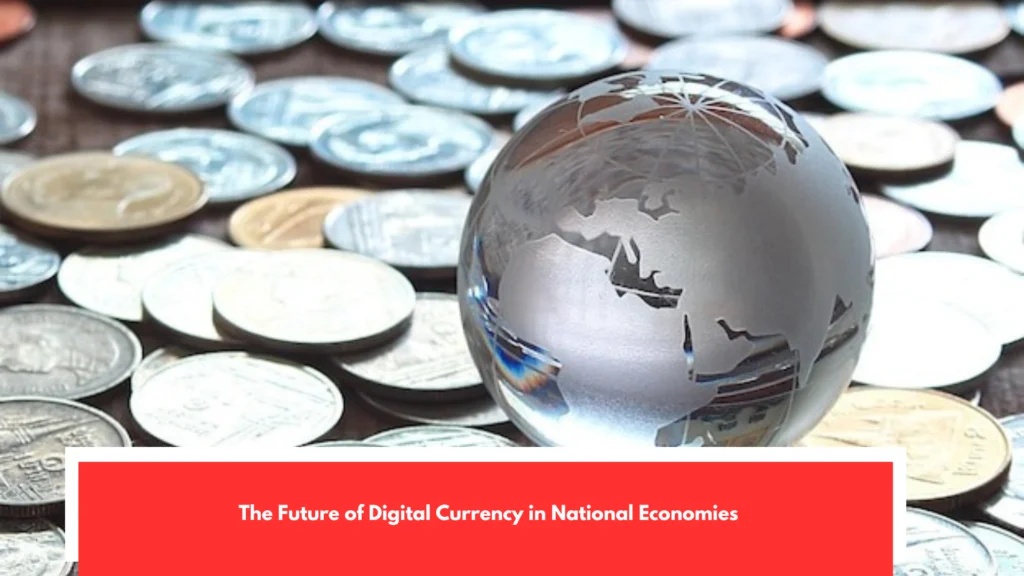

CBDC (central bank digital currency) is a digital version of a nationwide traditional, emerge, currency. Therefore rather than print of coin physical money into circulation, a central bank would put into circulation coins of electronic form with full faith and credit government backing. To make it clear, transactions made using this digital currency are not identical to what you do with your credit cards and other payment apps at present. The Future of Digital Currency in National Economies shows it’s more than just electronic money transfer.
An actual CBDC converts money into computer code. As the Bank of International Settlements reported, 93 percent of the global central banks have initiated the studies of digital currencies and 15 CBDCs are likely to go on public circulation by 2030 (it is possible to track their development with the help of this web-based tool). It can be the evidence of the fact that all central banks are effectively at war with each other and the crypto world is becoming a bigger threat to fiat currency and a danger to the instruments that allow central bankers to regulate their economies.
What are the CBDCs?

The number of them is quite large. They cannot be fake, and they simplify the work of governments to detect crimes and monitor the money circulation. And the fact that the CBDCs are of the same value as the paper versions is also likely to contribute to them being a good deal less volatile than the cryptocurrencies. It should also permit quick and low-cost transfer of money (even across borders), which might stimulate the economy, in addition to granting access to the financial system, to unbanked and underbanked individuals, in a more convenient manner.
The Future of Digital Currency. However, what is not so obvious to consumers is that it would be much easier to stage economy-boosting policies that governments are to take up at short notice. With CBDCs, then, let us say during the pandemic when the stimulus checks were being passed to people, the authorities would be able to send those stimulus checks to the digital wallets of individuals much faster.
What are the benefits of CBDCs?

The Future of Digital Currency. The digital yuan has been tested by China with an expiration date in order to drive its users to use it, which comes in handy during periods in the economy when the economy needs a boost. And perhaps more importantly, the bank of England has opined that its digital pound would enable parents to program the spending allowance of kids such.
That they cannot spend it on candy, phew. Programmable money that is also very traceable as the case with CBDCs sounds awesome, but herein lies the biggest problem with the CBDCs, that they would give policymakers unprecedented power, the ability to know how people spend in real-time, and create an audit trail of how everyone spends money in their economies. That raises pertinent discussion on privacy and fundamental freedoms. That is what makes the idea controversial since some even call to ban it completely.
What industries could be disrupted by CBDCs?

When implemented properly. To start with, an issued digital currency should not serve as a substitute of taking out the physical banknotes but only as the addition to them whereas people should have the right to use the banknotes instead of the digital currency. And governments themselves should clearly state that banknotes are not going to undergo extinction, that they will somehow continue fulfilling their role of an effective element to pay with.
Second, privacy must be the focus of the design of a digital currency. Similar to cash, the use of digital dollars should not need identification, bank account and disclosure of personal information to engage in typical financial tasks. That is what the Bank of Canada is experimenting on with its statement that it is not losing sight of those privacy concerns. These cryptocurrencies have the potential of eliminating payment companies altogether. A case in point is the digital yuan which will eliminate the usage of the privately operated electronic payment platforms.
Conclusion

The object of punitive action by China in times past. Or, in case it is the latter, that would be bad news to a company such as Block (formerly Square), PayPal, Mastercard, Visa, and Global Payments. Bank run occurs when many patrons of the bank, worried about the solvency of the financial institution, begin to pull out their physical cash on a rush basis. Just suppose that those clients now, with a touch of a button, can transfer their money to a CBDC.
This would simplify bank runs significantly and increase their prevalence significantly, which is not good news to the financial sector. This might be avoided by the authorities but you know, by restricting the amount of CBDC people can possess, and so on. However, the challenge of bank runs is not the only problem: even during a boom, the customer deposits (an important and cheap source of funding to banks) can leave the system in case people simply find it more convenient to hold digital money stored with a central bank.
